




Let's talk about how to fade dark spots in a 100% honest way: it's slow. Not "your serum isn't working" slow. Biologically, structurally slow, because the excess melanin sitting in your skin has to clear as your cells turn over, and that sets a floor on how fast this can go. The fastest way to fade dark spots realistically still means months, not weeks.
Here's the good news: the biggest gains usually come from removing whatever's slowing you down, not from adding yet another ten products to an already crowded shelf. Depth matters too. Surface-level pigment clears a lot faster than pigment sitting deeper, which is why you and your best friend can be on the exact same routine and get completely different results.
Below: what really speeds up the process of getting rid of dark spots on your face, what undoes your progress, and a realistic week-by-week look at what to expect.
Why Dark Spots Fade Slowly in the First Place
Understanding the "why" here is what makes the timeline below feel reasonable instead of discouraging, so stick with us for a minute.
A dark spot is a concentration of excess melanin. Your skin cells produce melanin naturally, but when those cells are damaged or irritated, they can go into overdrive. That excess pigment clumps together, making the patch look darker than the skin around it
Here's what explains the wait: two things have to happen before a spot visibly fades. New pigment production has to slow down, and the pigment that's already there has to clear as the cells carrying it work their way to the surface and shed. A product that only does one of those will feel like it isn't working, because for a while, it genuinely won't look like it is.
Skin cell turnover takes several weeks under normal circumstances, and it slows down as you get older. That's the floor, and there's no topical shortcut around it. It's also why the same dark spot on a 25-year-old and a 55-year-old won't clear on the same schedule, even with identical routines.
We're keeping causes brief here on purpose (sun exposure, breakouts, and hormonal shifts each get their own deep dive below). What matters for this one: the clearing process for post-inflammatory hyperpigmentation is gradual by design. That's not a flaw. It's just biology.
How Long Does It Take for Dark Spots to Fade?
A spot a few shades darker than your natural skin tone will usually fade within 6 to 12 months. If the pigment sits deeper in the skin, fading can take years.
Treatment shortens that window. It doesn't erase it. In a systematic review of post-inflammatory hyperpigmentation, topical retinoids showed real, measurable improvement after 12 weeks, and the same review describes the condition as chronic once it develops and often difficult to treat. Twelve weeks is a fair first checkpoint. Three weeks is not, so try to hold off judging your routine before then. For scale: across the studies in that same review, the average dark spot had already been hanging around for about 21 months before treatment even started. These are not fast-moving marks.
Skin tone plays a role too. Post-inflammatory hyperpigmentation tends to show up more, and stick around longer, in deeper skin tones. So if that's you, the real advice is to plan for the longer end of every range here, not the shorter one. That's not a reason to expect less from your skin. It's a reason to give your routine a fair shot before deciding it isn't working.
Why Surface Pigment Clears Faster Than Deeper Pigment
Depth is the single strongest predictor of how long a dark spot on your face takes to fade, and it's the one thing no product can change for you.
Pigment sitting in the upper layers of skin tends to look light to medium brown. Pigment that's settled deeper often reads as slate blue, gray-toned, or noticeably darker than the skin around it.
You don't need to work this out precisely (and you honestly can't do it accurately at home). Dermatologists use tools like a Wood's lamp to assess depth properly. The takeaway is simpler: if a spot looks deep and stubborn, give it more time before deciding anything's failed, and don't judge your whole routine by your single worst mark.
What Genuinely Speeds Fading Up
Here are the four things that actually make a difference:
Daily sun protection. First for a reason. More on this below.
Ingredients that target the look of excess pigment. Vitamin C for dark spots is the classic pairing, alongside niacinamide for overall tone. Azelaic acid and tranexamic acid tend to show up for more stubborn marks. These work on the first half of the problem, slowing new pigment rather than clearing what's already there, which is exactly why they pair so well with the next point instead of replacing it. Stronger prescription options do exist, but those live with your dermatologist, not in a routine you build yourself.
Doctor-founded. Science-backed. Clinically-proven. That's the whole idea behind our Brightening Treatment Drops, a triple vitamin C serum formulated with prebiotics to nourish your skin microbiome while it brightens the look of skin & dark spots and helps defend against the elements that cause dullness. 96% saw more radiant looking skin after just 1 week. Use it morning and night, then follow with SPF once the sun's up. If your marks are more post-acne in nature, our Dark Spot Serum leans on 7% niacinamide plus lactic acid instead, formulated specifically to fade the look of post-acne scars.
Gentle support for turnover. This is the second half of the problem: helping the cells carrying pigment actually reach the surface and shed. A mild alpha hydroxy acid (lactic acid is a gentle place to start) or a bakuchiol-based retinol alternative can help move things along, without the redness and peeling traditional retinol tends to bring. Emphasis on gentle. Irritated skin makes more pigment, not less, so this is not the place to go hard.
Consistency over months. Applying something four days a week for three months does a lot less than applying it every single day for the same stretch. The perfect routine you use sporadically? Not so perfect. The simple routine you actually stick with? Now we're glowing.
One more thing worth knowing: stacking every active at once tends to backfire, because irritation itself can trigger fresh pigment. Two well-chosen products used daily will outperform six used sporadically, every time. Balance, not overload.
Why Sunscreen Is the Accelerator, Not Just the Preventer
Most people file sunscreen under prevention. For dark spots on your face, it belongs under treatment.
UV exposure re-darkens the spots you're actively working on. So skipping it doesn't just slow your progress, it actively reverses it. Post-inflammatory hyperpigmentation is frequently made worse by ultraviolet radiation and sun exposure, and photoprotection matters even when you're not treating with anything else.
Visible light plays a role too, which is why dermatologists recommend a tinted sunscreen with iron oxide for anyone working on dark spots. Look for iron oxide in the ingredient list, alongside SPF 30 or higher and broad-spectrum coverage. Cloudy days count. So does sitting near a window. Yes, really.
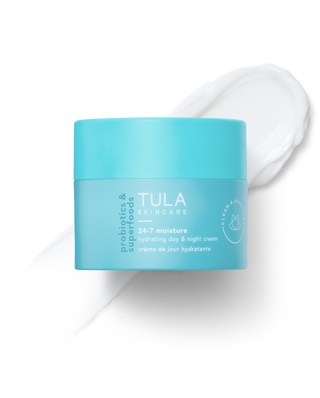
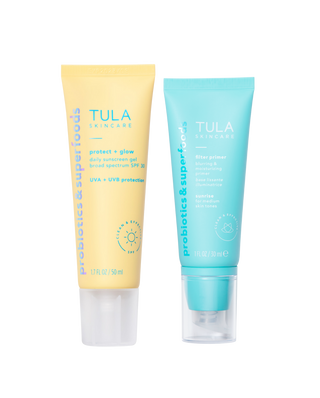
Not sure where to start? Our SPF lineup is built to be part of your skin wellness ritual, not a chore you tack onto the end of it.
What Slows Fading Down
Most stalled progress comes from something being done, not from a product that failed. Here are the common culprits, and every single one is fixable.
Inconsistent SPF. Covered above, and genuinely the biggest factor of all.
Picking and squeezing. Every episode of inflammation risks leaving behind a new mark, often darker than the one you started with. We get the urge. Resist it anyway.
Over-exfoliating. The counterintuitive one. Irritation can trigger fresh post-inflammatory pigment, meaning an aggressive routine can add new spots while the old ones are still clearing. It's not hypothetical, either: in research on post-inflammatory hyperpigmentation, a meaningful share of cases were triggered by treatments including lasers, hair removal, light therapy, and chemical peels. More intensity is not more progress. It's usually the opposite.
Switching products every few weeks. If you change your routine before the 12-week mark, you'll never actually know what was working. Change one variable at a time, then let it do its job.
Not addressing the root cause. If breakouts keep showing up in the same spot, you're clearing marks on one end and creating them on the other. Treating the underlying concern usually does more for pigment than any brightening product on its own.
None of this is stuff you should've just known. It's common, and a daily broad-spectrum sunscreen plus a lighter hand fixes most of it.
A Realistic Dark Spot Treatment Timeline, Week by Week
Here's what to expect, and roughly when, assuming daily SPF and a routine you actually stick to:
Weeks 1 to 4. Changes here are about overall radiance and hydration, not the spots themselves. Skin may look fresher and more even overall while every individual mark stays exactly where it was. That's normal. That's a good sign, actually.
Weeks 4 to 12. Tone starts looking more even, and the edges of spots typically soften before the centers lighten. This is where most people quit. Usually a few weeks too early.
Months 3 to 6. Individual spots visibly lighten. Deeper pigment still needs more time.
We track results for Brightening Treatment Drops at two checkpoints, and they map onto this timeline pretty closely. After 1 week, 96% saw more radiant looking skin. After 6 weeks, 77% agreed dark spots and blemish marks looked more faded. Early radiance first, spots later. That's the pattern.
Individual results vary widely depending on skin tone, spot depth, and sun exposure, so treat these as ranges, not promises. What matters is that early radiance is a reasonable signal your routine is doing something, even while the spots themselves still look unchanged. Ready to build a routine around this? Our Dullness & Uneven Tone collection is grouped by exactly this concern.
When Skincare Alone Isn't Enough
Some pigment just doesn't respond well to topicals, no matter how consistent you are. Deeper, dermal pigment is the main example. Melasma is another: it's strongly linked to hormonal changes and sun exposure, and it's typically managed with prescription treatment rather than anything over-the-counter.
Professional options do exist, including prescription topicals, chemical peels, and laser or light-based treatments. They work through different mechanisms and carry different risks, and which one makes sense for you depends entirely on what's actually causing your pigment. That's a conversation for a dermatologist.
One caveat worth carrying into that thread: several of these treatments can themselves trigger new pigment, and the risk runs higher in deeper skin tones.
Worth booking an appointment if: you've seen no visible change after around 6 months of consistent use, a spot is changing shape or color, or pigment keeps returning despite genuinely good sun protection.
How to Tell Whether It's Working
Slow change is legitimately hard to judge in a bathroom mirror, and that's a big part of why people give up early.
The fix is boring, and it works. Take a photo at the start, then every 4 weeks. Same lighting, same time of day, no makeup, same distance and angle. Your memory of what your skin looked like 8 weeks ago is not reliable. A photo is.
What to look for might surprise you. The edges of a spot usually soften and blur before the center lightens, so comparing outlines tells you more than comparing darkness. Overall tone evenness across your whole face is also a better early indicator than any single mark.
Give a routine a full 12 weeks before you judge it. If you do decide to adjust, change one thing at a time, or you'll spend another 3 months not knowing what actually helped. Keep the photos even after you're happy with the result. They make it much easier to catch pigment creeping back before it becomes obvious again.
Frequently Asked Questions
Are dark spots and acne scars the same thing?
No, and the difference decides what'll actually help. Dark spots are flat discoloration sitting level with the skin around them. True scars involve a change in texture, like a small pit or a raised area. Flat marks fade with time and the right topicals. Textural scarring generally needs professional treatment instead.
Can dark spots come back after they've faded?
Yes, if the original trigger returns. Sun exposure, new breakouts, and hormonal shifts can all bring pigment back to an area that's darkened before, since those areas tend to react again more easily. Ongoing daily sun protection is what keeps faded spots faded for good.
Does fading work the same way on the body as on the face?
The principle's identical, but the timeline usually runs longer. Skin on the chest, back, arms, and legs turns over more slowly than facial skin, so marks there commonly take longer to clear. Sun protection matters just as much here, particularly on shoulders, chest, and the backs of your hands.
Ready to Glow?
The thing that decides your results here isn't which serum you pick. It's whether you're still using it in 12 weeks, with sunscreen on top, every single day. Consistency beats intensity on this. As it does for many things in skincare.
Not sure where to start? Our skin quiz takes about 2 minutes and lands you on 2 to 3 products actually matched to your skin, instead of a shelf of half-finished bottles. A brightening step, something gentle for turnover, and a sunscreen you don't mind wearing daily is genuinely enough to work with. Then leave it alone and let the timeline do what it's going to do.


