




Has your skin been acting differently lately, and nothing about your routine really explains it? A skin microbiome imbalance could be part of the picture.
The most common signs of skin microbiome imbalance are persistent dryness and tightness, redness or stinging, breakouts that won’t quit no matter what you try, and skin that looks dull or feels rough. Dermatologists sometimes call this kind of imbalance “skin dysbiosis”. And an unbalanced skin microbiome and a stressed-out skin barrier can look almost identical from the outside, because the two work so closely together.
Below, we’re breaking down how to tell them apart, what causes skin microbiome imbalance in the first place, and what actually helps, the TULA way.
What Is the Skin Microbiome, and What Does It Do?
Your skin is home to its own living ecosystem, tucked into your pores and spread across the surface. That's your skin's microbiome, and balance (not any single ingredient) is what makes it work in your favor.
Your skin naturally hosts a mix of helpful and less helpful elements within that ecosystem, and for your microbiome to feel balanced, the helpful side needs to outweigh the rest. This ensures your skin barrier is well supported.
But it’s not all the same across your whole skin. Oilier areas like your forehead, chest, and back favor a different balance than the drier skin on your arms. That's part of why your face, scalp, and body don't behave identically, and why they don't need identical care.
Your skin’s pH plays a role, too. At its best, skin sits slightly on the acidic side, and that natural balance (sometimes called the acid mantle) helps keep your skin’s ecosystem in check.
None of this happens deep inside your skin. It all plays out on the surface, which is exactly where your routine comes in.
Signs of Skin Microbiome Imbalance to Watch For
You can’t see your microbiome, so the easiest way to check in on it is to pay attention to how your skin is behaving, not to hunt for one specific symptom. On its own, one sign rarely means much (dry skin in February is often just February). What’s actually worth noticing is a cluster of signs of unhealthy skin microbiome showing up together, or a clear shift from how your skin usually acts. Signs can also lag, showing up days or weeks after whatever triggered them, which is part of why the cause can be so hard to pin down.
Persistent Dryness, Tightness, and Flaking
Skin that feels tight or looks flaky, even though you’re moisturizing regularly, is one of the most commonly reported signs of skin microbiome imbalance. When your skin’s surface is under stress, it loses hydration faster than moisturizer alone can keep up with.
Pay attention to timing. A little tightness right after cleansing is normal and usually settles within a few minutes. Tightness that shows up after washing and just stays? That’s your skin telling you something different, and a sign it’s time to simplify.
Redness, Stinging, and Sudden Product Sensitivity
Reacting to a product you’ve used happily for months is a real sign. The formula didn’t change, so something about how your skin is receiving it did, and a more reactive surface is usually why.
Stinging on application, or redness that lingers longer than it used to, are both irritation responses, and neither one means you’re dealing with an allergy. An unbalanced skin microbiome has been linked to sensitive, irritated, and dry-feeling skin, along with concerns like eczema and acne.
The good news? Heightened reactivity is usually temporary. It tends to settle once you simplify your routine and give your skin room to recover.
Breakouts and Congestion That Won’t Respond
Breakouts showing up in new places, or sticking around despite consistent use of a treatment are anothing thing.
The elements most associated with breakouts are part of pretty much everyone's skin ecosystem, acne-prone or not. What tends to differ isn’t how much is there, it’s the balance, and how your skin responds to it.
The instinct is to strip harder. That usually backfires, putting more pressure on a surface that’s already struggling. If you’re using a treatment with salicylic acid, stick to using it as directed rather than doubling up. Our Acne & Oil Control formulas are built to treat breakouts without stripping skin further.
Dullness, Rough Texture, and Slower Recovery
Skin that looks flat or feels rough despite regular exfoliating is a common complaint, and it’s usually not a sign you need to exfoliate more. Uneven hydration across the surface scatters light differently, and rough patches follow.
The more useful sign here is recovery time. If redness after a treatment, a strong active, or a day in the sun sticks around noticeably longer than it used to, that’s your skin working harder than usual to get back to baseline.
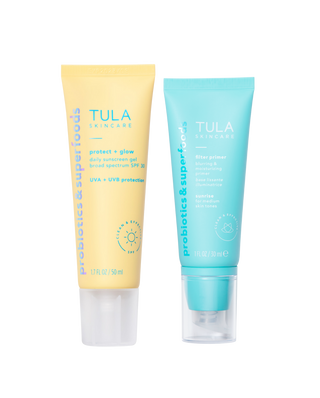
That comparison matters because it’s against your own skin, not anyone else’s. If dullness is your main concern, our Cult Classic Luminous and 24-7 Moisture Luminous duo are built to purify and hydrate while supporting a brighter, more healthy-looking glow over time.
Skin Microbiome and Skin Barrier: What’s the Difference?
The symptom lists look nearly identical.
But here’s the difference. Your skin barrier is structural: it’s your skin’s outermost layer, and its job is keeping moisture in and irritants out. Your microbiome is the living ecosystem sitting on and within that structure.
The two aren’t independent. When your skin barrier is compromised, it tends to lose more moisture and let more through, and shifts in your skin’s microbial balance tend to follow right alongside it. Stress one, and the other tends to follow.
In practice, most people are dealing with both skin microbiome and skin barrier stress at once, rather than picking between them. That’s actually good news, because the steps are the same either way: reduce what’s stressing your skin, and support the surface. If you’re looking for formulas built for dryness and barrier support, that’s the category to start in.
One thing worth taking seriously: redness, itching, or flaking that’s persistent, painful, or spreading deserves a look from a board-certified dermatologist. Conditions like eczema, rosacea, and seborrheic dermatitis can look similar and need a proper diagnosis.
What Causes Skin Microbiome Imbalance
Your routine could be the culprit. Over-cleansing, harsh cleansers, and frequent exfoliation can strip your skin’s surface and shift its natural pH, and both of those change the environment your skin’s ecosystem depends on. Constantly rotating new actives makes it worse, because your skin never gets a settled baseline to work from. Layering several strong products at once creates a second problem: when something does react, you have no way of knowing what caused it. Switching to a gentler daily cleanser, like The Cult Classic, is often the single most effective change you can make.
Your environment plays a part, too. UV exposure, pollution, hard water, low humidity, and seasonal swings all affect the surface your skin’s ecosystem lives on, and so do stress and hormonal shifts.
Treatments matter as well. Microneedling, waxing, laser resurfacing, and strong at-home peels all temporarily disrupt your skin’s surface. That’s broadly how they work. It also means the days afterward call for a simpler routine than usual, not your normal routine plus a recovery serum.
How to Balance Your Skin Microbiome (the TULA Way)
The order matters here. Remove stressors first, then add support. Piling more product onto irritated skin is the most common response, and the least effective one.
A gentle cleanser, a moisturizer, and daily broad-spectrum sunscreen, for two to four weeks. That’s not meant to be your forever routine. It’s a baseline, and you need one before you can tell what’s actually helping.
Cleanse once or twice a day and after sweating, with lukewarm water and your fingertips. This matters more than which cleanser you choose, though a formula with prebiotics like The Cult Classic cleanses to purify the skin microbiome while it works.
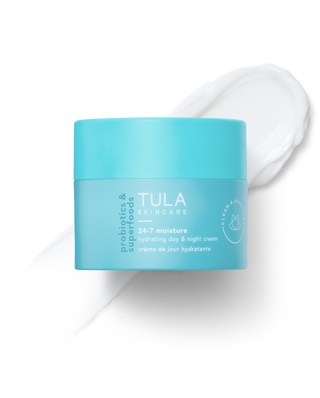
Moisturize consistently. A hydrating formula like 24-7 Moisture hydrates to nourish the skin microbiome and hydrates to strengthen the skin barrier, so your ecosystem has a stable environment to sit in.
Then reintroduce actives one at a time, leaving several days between each. If something reacts, you’ll know exactly what it was. Patch testing a small area first is worth the short delay.
Give it weeks, not days. Skin turns over slowly, so two weeks of consistency will tell you more than a few days of experimenting.
Where Prebiotic Skincare for Microbiome Balance Fits
Everything affects your skin microbiome: stress, sleep, hormones, weather, pollution. When something throws it off, that’s when concerns like breakouts, redness, dryness, dullness, and sensitivity tend to show up. That’s where prebiotic skincare for microbiome balance comes in, supporting your skin from within the skin surface, not just on top of it.
Prebiotics are ingredients that support your skin’s natural ecosystem and help create an environment where your skin can look and feel its best. Our formulas with prebiotics hydrate to nourish and balance the skin microbiome, support your skin surface barrier, and enhance your skin’s natural, healthy-looking glow.
Skin wellness starts with balance, and that’s exactly what our prebiotic skincare is designed to deliver. Instead of forcing change, it works with your skin’s own systems, nourishing what’s already there rather than replacing it.
FAQs
How long does it take to restore skin microbiome balance?
Expect gradual change over several weeks rather than days. The timeline depends on what caused the imbalance and how consistently you keep your routine simple. Skin recovering from a professional treatment behaves differently than skin recovering from months of over-exfoliating, so there’s no single number that applies to everyone.
Does the skin microbiome change with age?
Yes. Your skin’s ecosystem shifts across your lifespan, and those changes are linked to a less resilient skin barrier over time. It’s one reason barrier support becomes more important as you get older.
Is the gut microbiome connected to the skin microbiome?
Researchers are actively studying a possible link, often called the gut-skin axis, and the evidence is still developing. Treat it as a real area of ongoing research rather than an established fact.
Next Steps
If you recognize your skin in any of this, the useful next move isn’t another random product. It’s figuring out what your simplified, balanced skin routine should actually look like, and that depends on your skin type and what you’re dealing with.
Take our Skin Quiz. It runs through a few quick questions and gives you a routine built around your skin, rather than a generic recommendation. Then rebuild slowly. Your skin will tell you what’s working.


