




Yes, stress can affect your skin microbiome.
The hormones your body releases under pressure change the conditions your skin's natural ecosystem depends on, and that shows up as a shift in balance, not permanent damage. It usually settles once the stressor eases and your skin gets some support. The link between stress and skin microbiome balance runs through your skin barrier too, so when one is unsettled, the other tends to follow.
Below, we break down what's happening on your skin during a stressful stretch, the signs worth noticing, and what actually helps.
What the Skin Microbiome Is and Why Balance Matters
Your skin microbiome is your skin's natural ecosystem, living on the surface of your skin. It sounds a little unusual written down, but in practice, it's one of the reasons your skin looks and feels as balanced as it does: a diverse, balanced microbiome supports your skin's own defenses.
And a balanced microbiome isn't a “sterile” one. Skin is a demanding place to live: dry, low in nutrients, and slightly acidic. Your skin's natural ecosystem thrives there anyway, having adapted to that environment, and its presence actually makes it harder for anything less-welcome to move in. All of this sits on and around the stratum corneum, the outermost layer of your skin, and the acid mantle, the slightly acidic film across its surface. Skin pH matters here: the environment that suits your skin's own ecosystem is the same one that makes life harder for anything you'd rather not host.
When that balance shifts, it's usually described as an imbalance rather than any single dramatic event. It's been linked to the onset of some persistent skin concerns, and it tends to build gradually from a long list of ordinary factors rather than one big cause.
The useful thing to know about skin microbiome balance is that it responds to what you do and what your body is going through. It isn't something you either have or have permanently lost.
How Stress Reaches Your Skin
Stress isn't only felt in your head. Your skin is an active participant in the stress response, not a bystander watching it happen elsewhere in the body.
Here's how stress affects your skin, step by step.
When you're under sustained pressure, cortisol rises. Your oil glands produce more sebum, which is why stress breakouts often show up at the worst possible moment for anyone already prone to them. Stress also increases inflammation and slows wound healing, so the spot that would normally clear in a few days hangs around for a week instead. It can trigger flares in conditions like psoriasis and eczema, too.
Short bursts of stress and long stretches of it behave differently. A stressful morning is not the thing most people notice on their face. What shows up is the effect of weeks of poor sleep, deadline pressure and disrupted routine stacking on top of each other, which is why stressed skin tends to appear in seasonal clusters rather than randomly. Holiday season, exam season, the weeks after a house move.
The relationship also runs both ways. Skin that looks reactive or broken out can raise how stressed you feel, which feeds straight back into the same loop.
None of this means stress is the sole cause of what you're seeing. Most skin concerns have several inputs at once. Stress is one of them rather than the whole story, and treating it as the only explanation usually leads to the wrong fix.
What Stress Does to Skin Microbiome Balance
Stress hormones have been linked to changes in your skin's microbiome, in the same way any ecosystem responds when its environment shifts. Stress changes the surface conditions on your skin, and your skin's natural ecosystem tends to change along with it. That said, stress isn’t the only culprit here. Pollution, UV exposure, harsh products, and hormonal changes can all throw things off.
When that balance becomes unsettled, your skin tends to let you know about it. If dryness is the loudest signal you're getting (it’s really quite common), moisturizers made for a stressed, dehydrated barrier are the place to start.
The Barrier and Microbiome Feedback Loop
Your skin surface barrier and your microbiome hold each other up. The barrier gives your skin's microbial balance a stable place to live, and that balance contributes to keeping the barrier's surface conditions right.
When the barrier weakens, it loses water more readily and lets irritants through more easily. Both of those change the surface environment, which can unsettle microbial balance further. That's the loop, and it's why stressed skin usually shows up as several things at once: dryness, sensitivity and breakouts arriving together rather than one neat isolated concern.
The good news is that the loop runs in the helpful direction too. Supporting the barrier improves the conditions your microbiome depends on, and a steadier balance makes it easier for the barrier to hold its ground.
Signs Your Skin Microbiome May Be Off Balance
The most common is new or increased sensitivity. Products you've used happily for years start to sting. Redness lingers longer than it used to after a hot shower or a cold walk. Tightness or dryness persists even though you haven't changed anything, or your usual moisturizer stops feeling like enough by mid-afternoon when it always used to last.
Breakouts during stressful periods are extremely common, and they're rarely down to one thing. Increased oil, changed habits, a compromised barrier and shifts in your skin's microbiome balance can all be happening at the same time, which is part of why stress breakouts are so stubborn to treat with any single product.
If symptoms are persistent, painful or spreading, that's worth a conversation with a dermatologist rather than another product. Not because something is seriously wrong, but because a professional can tell you in one appointment what you might otherwise spend three months guessing at.
Everyday Stress Habits That Make Things Worse
When your skin looks unsettled, the instinct is to do more to it. Another cleanse, another exfoliant, something stronger. That instinct is usually the problem, and it's an easy one to fall into when you're already stressed and want a quick fix.
Over-cleansing, layering several actives at once, over-exfoliating, and reaching for harsh, overly stripping washes all remove surface lipids and disturb the environment your skin's ecosystem relies on. And these products don't discriminate: they can take your skin's natural balance down along with everything else, which sometimes makes the situation worse rather than better.
Stressful periods bring their own habits too. Sleep gets shorter. Routines get skipped. Moisturizer gets forgotten on the nights you're most tired and most likely to need it. Those shifts add up to the hormonal side of things without ever feeling like a decision you made.
How to Support Your Skin Microbiome Through Stressful Periods
The goal isn't to add anything new to your skin. It's to protect the conditions your skin's existing balance depends on, and that turns out to be a fairly short list.
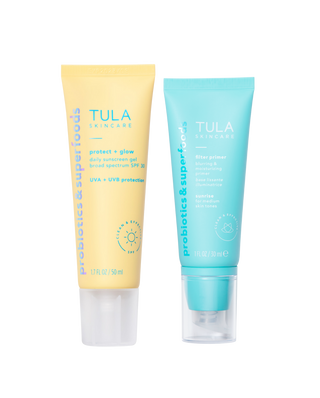
Cleanse gently rather than stripping, so you're removing the day without taking your surface lipids with it. A gentle option like The Cult Classic Purifying Face Cleanser cleanses to purify the skin microbiome without leaving skin feeling stripped.
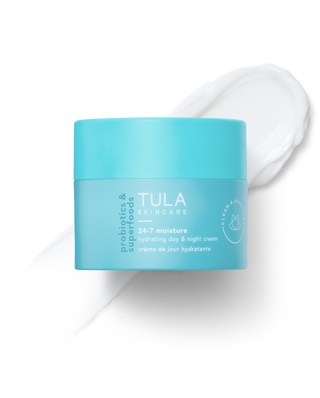
Moisturize consistently, morning and night, with a formula like 24-7 Moisture, because a supported barrier and microbiome are the most useful thing you can offer your skin and your glow, and consistency matters a lot here.
Pause strong actives while your skin feels reactive, particularly acids and retinoids. Then reintroduce them one at a time, so you can actually tell what your skin is responding to rather than guessing across four variables at once.
Lifestyle matters alongside what you put on your face. Sleep, movement and stress management influence skin almost as much as any product does. Mind body practices such as meditation, breathwork and yoga can be a real part of skin care.
If you want a starting point, our prebiotic skincare for stressed skin is built around this idea of supporting balance rather than overriding it, the same Skin Wellness philosophy behind every TULA formula.
Frequently Asked Questions
Can gut health supplements help stressed skin?
Researchers are exploring the gut-skin axis, the relationship between digestive health and skin, but the evidence for any specific skincare outcome from oral supplements isn't quite settled yet.
Does poor sleep affect the skin microbiome too?
Sleep loss and stress usually travel together, and both influence the skin's barrier and its inflammatory response. Dermatologists consider sleep one of the everyday lifestyle factors that shapes how stress shows up in skin. Improving it helps, but it's one factor among several rather than a standalone fix.
Should I stop using actives when my skin is stressed?
Pausing or reducing strong actives while skin feels reactive is a reasonable step. Bring them back one at a time once things settle rather than all at once. Go by how your skin actually feels rather than a fixed schedule or a calendar, and follow your own dermatologist's advice where you already have it.
Back to Supporting Your Skin
If there's one thing to take from all this, it's that supporting stressed skin is mostly about doing less, more consistently. That's easier said than done when you're not sure which parts of your routine are helping and which are adding to the problem.
If you'd like a hand working that out, the TULA Skin Quiz walks you through a few questions about your skin and where it's at right now, then suggests a routine to match. It's a good place to start if your current routine has gradually grown into something your skin no longer wants.


