




A fragrance free cleanser is one made without any added scent, and it matters most for skin that genuinely reacts to fragrance, not for everyone.
But that group is bigger than you might think. It includes anyone with a confirmed fragrance allergy, skin that runs reactive, eczema-prone or rosacea-prone skin, and skin that's temporarily fragile after a procedure or a stretch of strong actives.
That said, your cleanser sits on your face for under a minute before it goes down the drain, which puts it in a different category from a serum or moisturizer that stays put all day.
So, do you need a fragrance free cleanser? Here's how to tell.
What “Fragrance-Free” Actually Means on a Cleanser Label
It sounds like a phrase that explains itself. It doesn't, quite, which is why so many people end up in the skincare aisle comparing two bottles that both promise gentleness.
Fragrance-free describes a formulation decision: no fragrance materials were added to give the product a scent. It isn't a promise that the bottle smells like nothing.
It's also not policed by one single binding standard the way a drug claim is. Some certification programs define it tightly. The EPA, for its Safer Choice label, treats fragrance-free as meaning that neither fragrance materials nor masking scents are used in the product. Outside a program like that, the phrase is largely defined by whoever prints it on the carton, which leaves the ingredient list as your only reliable check.
The smell thing often surprises people, though. Surfactants, plant oils and botanical extracts all carry an odor of their own, and no amount of leaving fragrance out changes that. So a product can qualify as fragrance-free and still have a scent, because ingredients like surfactants and solvents bring one with them. If your fragrance-free cleanser smells faintly of something, the label isn't lying to you. Scent and added scent are two different claims, and only one of them is being made.
Fragrance-Free vs Unscented: Not the Same Claim
Unscented usually describes a product formulated to smell like nothing, and that's often achieved by adding a masking fragrance to cover the base odor of the raw materials. The AAD lists balsam of Peru as a common allergen precisely because it turns up in “unscented” products used to cover up a fragrance.
The fragrance-free label isn't bulletproof either. Dermatology reviews have noted for years that products labeled unscented, hypoallergenic, or even fragrance-free do sometimes contain masking fragrances. If you've got a confirmed fragrance allergy, a masking agent is still an exposure, and the front of the pack won't tell you it's there. The back will, in about ten seconds, once you know what you're looking at (more on that further down).
Why a Cleanser Is a Lower-Risk Place for Fragrance Than a Serum or Cream
Exposure depends enormously on contact time. Your cleanser is on your skin for something like 20 to 60 seconds, diluted with water, then rinsed down the drain. A moisturizer or serum stays put for hours. That makes a huge difference.
None of that makes fragrance in a cleanser irrelevant.
If you're already sensitized, brief contact can be enough, and a cleanser touches your whole face, including the thin skin around your eyes. But if you're going to strip fragrance out of one step, your leave-on products are usually the higher-value place to start, which makes the cleanser you use every day the step where the decision is more personal rather than automatic.
Who Benefits From a Fragrance-Free Cleanser
Four groups:
People with a diagnosed or suspected fragrance allergy. This is the clearest case. If patch testing has flagged a fragrance material as a trigger, avoidance across every product format is the standard advice, rinse-off included. This is where fragrance allergy skincare stops being optional and starts being the decision point. Fragrance is one of the most common causes of allergic contact dermatitis, and estimates put contact allergy to one or more fragrance materials at up to 4.5% of the adult general population.
People with eczema-prone or rosacea-prone skin. A fragrance-free cleanser for sensitive skin is fairly routine advice. When the barrier is already compromised, irritants reach reactive skin more easily.
People whose skin is sensitive or temporarily fragile. Skin recovering from a procedure, from a stretch of over-exfoliation, or from a routine carrying three actives at once is in a different state than it was six weeks ago. Often that's a phase, not a permanent skin type, but your routine should reflect that.
People running a lot of leave-on products. Fragrance turns up in far more places than the ones that smell obviously perfumed, so more products means a higher cumulative load without you ever choosing it. Taking it out of the cleanser is a reasonable way to bring the total down without rebuilding a routine that's otherwise working.
And if you just don't like scented products, that's reason enough. Preference doesn't need a clinical justification. If you're building around reactive skin more broadly, skincare that’s made for sensitive skin is the wider category to look at.
Signs Fragrance Could Be Behind Your Irritation
The patterns include: stinging or tightness within a minute or two of cleansing, redness that settles once you stop using a product, or irritation showing up across several unrelated products that happen to share a scent.
The delay is what makes this hard. Allergic reactions can take hours or days to appear, so people tend to blame the newest product in the routine rather than the one they've used for months.
Also, irritation and true allergy are different mechanisms, and irritant contact dermatitis is far more common than the allergic kind. Only a dermatologist can tell you which one you're dealing with, usually through patch testing.
Who Probably Does Not Need to Switch
If your skin tolerates a scented cleanser comfortably, with no stinging, no redness, no tightness after rinsing, there's no evidence-based reason to change. Plenty of people who are technically sensitized to a fragrance material never experience a reaction from the products they use.
It's also worth being clear about what switching won't do. A fragrance-free cleanser won't resolve dryness, dullness, breakouts or rough texture on its own. Those have their own causes, and fragrance isn't usually among them, so swapping cleansers hoping to fix them mostly costs you time you could've spent on the actual problem.
If you do want to reduce fragrance across your routine, start where the exposure is highest. That's your leave-on steps, and specifically anything that smells strongly perfumed, since those carry the most fragrance by concentration as well as by contact time. And change one thing at a time, so that if something improves, you actually know what caused it.
How to Spot Hidden Fragrance in Your Skincare Ingredient List
The front of the pack is a starting point. The ingredient list is the evidence, and learning to spot hidden fragrance in skincare labels is a very useful habit to learn if you’re sensitive to it.
Fragrance is most often declared as “fragrance” or “parfum,” usually near the end of the list. That single word can stand in for a blend of dozens of individual materials, and in the US it's allowed to, because specific fragrance ingredients are treated as trade secrets under the Fair Packaging and Labeling Act. One word, a lot of chemistry.
In some markets you get more detail. EU rules require fragrance allergens to be listed separately once they pass a threshold, which is why you'll see terms like limonene, linalool, citronellol, geraniol and benzyl benzoate turning up on labels. Those aren't extra additives someone slipped in. They're components of the fragrance, broken out by name.
Essential oils and botanical extracts complicate things further, because they're often used for scent as well as for whatever else they do. A product can contain no parfum at all and still carry scent-contributing materials. So read the whole list rather than scanning for one word.
None of these ingredients are hazards, and seeing one on a label isn't a reason to put the bottle down. They're materials some people react to, which is a very different thing from materials nobody should use. What makes this easier is a brand publishing the complete ingredient list on every product page rather than making you go find the box. That's exactly why you'll find the full ingredient list on every TULA product page, no digging required.
What Else Matters in a Fragrance-Free Cleanser
Removing fragrance solves one variable. A harsh fragrance-free cleanser will still leave your skin feeling tight, and plenty of them do.
The surfactant system does most of the work. Surfactants are the cleansing agents that lift oil and debris off your skin, and how gentle they are varies a lot between formulas. It's the reason one fragrance-free face wash feels comfortable and another leaves you reaching for moisturizer immediately, and it's the thing worth paying attention to once you've settled the scent question.
The most useful test is the one you can run at home. After rinsing, your skin should feel clean and comfortable rather than squeaky.
Our fragrance-free cleanser is formulated with prebiotics + antioxidants. It’s a refreshing gel cleanser that actively purifies your skin microbiome without stripping or over drying the skin. It also helps cleanse your skin from the effects of everyday pollution, and it's gentle enough to use morning and night for healthy-looking, balanced skin.
How to Switch Without Upsetting Your Skin
Change one product at a time. Swapping your cleanser and your moisturizer in the same week tells you nothing about which one helped, and you'll end up guessing.
Patch test on a small area for a day or two if your skin is reactive, even though the product is fragrance-free. Fragrance is one of the materials people react to, not the only one, and preservatives sit right alongside it on the list of usual suspects.
Give it two to four weeks of consistent use before you decide. Your skin can feel different within a few days, which is encouraging but isn't the final answer, since surface comfort changes faster than anything underneath it. Consistency is what makes the comparison fair.
And if you've got a diagnosed skin condition or a confirmed allergy, check with your dermatologist rather than relying on label reading alone.
Frequently Asked Questions
Is fragrance bad for your skin?
Not inherently, no. Fragrance is one of the more common triggers for irritation and allergic reactions in skincare, but most people use fragranced products every day without any issue. Whether it's a problem for you specifically comes down to how your own skin responds, not a blanket rule. If you've noticed stinging, redness or tightness that lines up with scented products, that's worth paying attention to. If you haven't, there's no need to go looking for one.
Does a fragrance-free cleanser have no scent at all?
Not necessarily. Fragrance-free means no fragrance materials were added for scent, but the raw ingredients can carry a faint smell of their own. Surfactants and solvents bring their own odor, so a mild scent from the bottle doesn't mean the claim is wrong.
Is fragrance-free the same as hypoallergenic?
No, they describe different things. Fragrance-free refers specifically to added fragrance. Hypoallergenic is a broader marketing term suggesting a lower likelihood of reaction, and it isn't backed by a single agreed standard. Both labels can still contain masking fragrance.
Can fragrance in a cleanser cause breakouts?
Fragrance is far more commonly associated with irritation and allergic reactions than with breakouts. Irritated skin can look bumpy and inflamed in a way that's easily mistaken for acne, which is why the two get confused. If breakouts persist, it's worth raising with a dermatologist rather than assuming a cause.
Are fragrance-free cleansers less effective?
No. Fragrance contributes to how a product smells, not to how well it cleans. Cleansing performance comes from the surfactant system, so leaving the scent out doesn't change what comes off your skin. The difference you'll notice is in the experience, not the result.
Next Steps
If you've read this far and recognized yourself in one of those four groups, the next step is straightforward: try a fragrance-free cleanser and give it a few weeks.
The easiest version of that switch is one where you don't give anything else up. The Cult Classic Fragrance-Free is the same cleanser as the original, minus the scent, so if you already get on with the gel-to-foam texture, nothing else about your routine has to change. It's recommended for acne-prone, balanced, combination, dry, mature, oily and sensitive skin types.
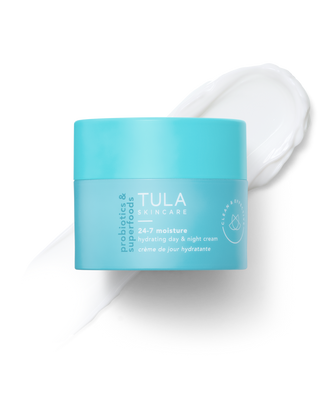
Want to take fragrance out of more than one step? Pair it with 24-7 Moisture Fragrance-Free for a full cleanse-and-hydrate routine with zero added scent (the two come as a set in The Iconic Duo, Fragrance-Free, if you'd rather shop it in one go), or browse the wider fragrance-free collection to build out further.
Not sure where to start? Take the Skin Quiz and we'll point you to the right formulas for your skin.


