




Sensitive skin and sensitized skin are not the same thing, even though the words get used interchangeably all the time.
Sensitive skin is a long-term tendency to sting, burn, itch or tingle in response to things that shouldn't bother skin at all. Sensitized skin is a temporary state, usually triggered when your skin barrier gets disrupted by over-exfoliating, harsh products or environmental stress. The trickier part is that the two can look and feel almost identical, which is exactly why they're so easy to mix up.
The difference matters, though. Sensitized skin often settles down once you remove whatever set it off, while sensitive skin is something you learn to live with and support for the long haul.
Here's how to tell which one you're dealing with, and how to care for each, the TULA way.
What Is Sensitive Skin?
Experts describe sensitive skin as a “syndrome”: unpleasant sensations like stinging, burning, pain, itching or tingling, set off by things that normally shouldn't cause them at all. Your skin can look completely normal while this is happening, or it may show some redness.
Just as importantly, those sensations can't be explained by another skin disease. If a condition like eczema or rosacea is behind the reaction, that's a different thing.
Sensitive skin is also incredibly common, with roughly 60-70% of women and 50-60% of men reporting some degree of sensitive skin. It can show up anywhere on the body, but the face is where most people notice it.
So, is sensitive skin genetic? Possibly, in part. Having more reactive nerve endings in the skin is a likely factor, alongside genetic susceptibility, environmental triggers and even stress. And really, researchers are still piecing together the full picture.
What Is Sensitized Skin?
Sensitized skin isn't a skin type you're born with. It's more of a state your skin can move into, whether it usually runs oily, dry, combination or sensitive.
It comes down to your skin barrier, which is the outermost layer of your skin that keeps moisture in and everyday irritants out. When that barrier gets disrupted, your skin loses water faster than it should (dermatologists call this transepidermal water loss, or TEWL), and products you've used for months without issue can suddenly start to sting.
The most common sensitized skin symptoms are sudden tightness, flaking, a rough or dull look, and stinging from products that felt perfectly fine last month.
Here's the good news: because sensitized skin is usually triggered by something external, like a new product, a harsh cleanser or a stretch of dry winter air, it tends to calm down once you find the trigger and simplify your routine.
Sensitive vs Sensitized Skin: The Key Differences
The simplest way to put it: sensitive skin is how your skin tends to behave, while sensitized skin is what shows up when you're dealing with a temporarily damaged skin barrier.
Sensitive skin |
Sensitized skin |
|
What it is |
An ongoing tendency |
A temporary state |
How it starts |
Often longstanding, sometimes for as long as you can remember |
Usually after a change in routine, products or environment |
Common triggers |
Weather, water, fragrance, cosmetics, stress |
Over-exfoliating, stacked actives, harsh cleansers, climate |
How long it lasts |
Comes and goes, but the tendency stays |
Often settles once the trigger is removed |
What usually helps |
Avoiding personal triggers and keeping routines short |
Pausing the trigger and simplifying your routine |
The most useful clue is timing. If your skin has always been reactive, you're likely looking at sensitive skin. If there's a clear before and after, sensitized skin is the more likely explanation.
That said, it’s worth keeping in mind that stinging, redness and tightness show up in both, and skin sensitivity can change over time.
What Causes Sensitized Skin?
Sensitized skin is your skin telling you it's been asked to handle more than it comfortably can. Ironically, it's often the result of trying really hard to do right by your skin.
The most common routine-driven causes include:
Over-exfoliating, whether with scrubs or chemical exfoliants like alpha hydroxy acids (AHAs) and beta hydroxy acids (BHAs)
Stacking several actives at once, such as retinoids, AHAs, BHAs and benzoyl peroxide
Harsh, surfactant-heavy cleansers that strip away the lipids your barrier depends on
Long, hot showers or washing your face with very hot water
Your environment plays a part too. Cold weather and low humidity, UV exposure, pollution and in-office procedures like peels or laser treatments can all leave your skin more reactive than usual. Even stress and hormonal changes can play a role in how reactive your skin feels.
And yes, many of these steps are meant to help, and each one might be perfectly fine on its own. But it’s often the combination that tips skin over the edge.
How to Tell Which One You Have
Only a board-certified dermatologist can diagnose an underlying skin condition, but you can spot a lot of useful patterns at home. Start by paying attention to when your skin reacts and what it reacted to. Sensitive skin may sting or burn after product use, so your product history is one of the best clues you have. Here's what to look for.
Signs Your Skin May Be Sensitized
Your skin may be sensitized if your reactions started recently. Maybe you added a new retinoid, started exfoliating more often, had a peel, or moved somewhere colder and drier.
Products you've used happily for months suddenly sting when you apply them. Your skin feels tight after cleansing and looks flaky, rough or dull. The pattern here is change: something shifted in your routine or environment, and your skin responded. That's actually encouraging, because it gives you a clear place to start.
Signs Your Skin May Be Sensitive
Your skin may be sensitive if it has reacted to lots of different things for as long as you can remember.
Fragrance, certain fabrics, weather changes, even plain water can set it off, and you might have a family member who says the same about their skin. Symptoms tend to come and go, flaring in certain seasons or during stressful weeks, but the underlying tendency sticks around even when your routine is already very gentle.
If that sounds familiar, the goal shifts from fixing a problem to learning what your skin tolerates and building a routine around it.
Try the Simplify-and-Observe Approach
Still not sure? Try simplifying. Scale your routine back to three steps: a gentle cleanser, a fragrance-free moisturizer and a broad-spectrum sunscreen in the morning. Pause exfoliants and strong actives, then watch how your skin responds over the following weeks.
If it calms down noticeably, it was likely sensitized. If it keeps reacting even on that minimal routine, you may have sensitive skin, or there may be an underlying condition worth discussing with a dermatologist. Everyone's timeline is different, so give your skin time rather than judging it after a few days.
How to Care for Sensitized Skin
Caring for sensitized skin is less about adding products and more about removing whatever's causing the irritation, then giving your skin room to recover. Building a simple skincare routine for sensitized skin usually does more good than reaching for any single “miracle” product.
Start with the basics:
Pause the triggers. Set aside exfoliants, retinoids and other strong actives for now.
Cleanse gently. Use a mild cleanser and lukewarm water, and skip rough washcloths.
Moisturize morning and night with a fragrance-free formula.
Wear broad-spectrum sunscreen daily, since UV exposure is one of the stressors you're trying to reduce.
Keep the rest of your routine as short as possible, too. Every extra step is another chance for irritation while your skin settles.
When you shop, read the label closely. Dermatologists recommend choosing products labeled “fragrance-free” rather than “unscented,” because unscented products can still contain chemicals that mask the smell of other ingredients.
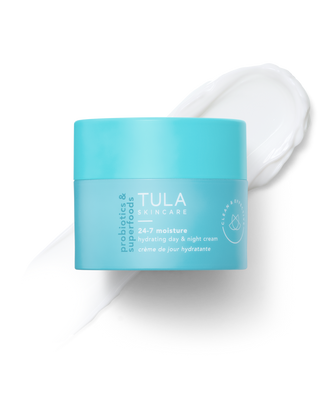
If you're looking for a fragrance-free daily moisturizer, 24-7 Moisture Fragrance-Free is a simple place to start:
Fragrance-free option of our bestselling moisturizer
Hydrates to nourish the skin microbiome
Safe for all skin types, including sensitive
Non-comedogenic and won't clog pores
Pair it with The Cult Classic or its fragrance-free version, which cleanses to purify the skin microbiome without stripping or over-drying, for a full cleanse-and-hydrate routine that won't ask too much of your skin.
Once your skin feels comfortable again, reintroduce actives slowly and one at a time. That way, if something does cause a reaction, you'll know exactly what caused it. It can be tempting to reach for something new to speed things along, but patience usually does more for sensitized skin than another product ever will.
How to Care for Sensitive Skin Long Term
Sensitive skin is usually something you manage rather than fix, and that's okay. The aim is fewer flare-ups and a routine your skin actually feels comfortable with. Avoiding possible triggers and use well-tolerated products. In practice, that looks like:
Keeping your routine short, with fewer products and fewer ingredients to react to
Choosing fragrance-free formulas wherever you can
Introducing one new product at a time, never several at once
Patch testing first. The AAD recommends applying a new product to a quarter-sized spot on the underside of your arm or the bend of your elbow twice a day for 7 to 10 days.
A simple trigger journal helps too. Note what you applied, the weather, your stress levels and any symptoms, and patterns often emerge that you and your dermatologist can act on.
At TULA, our approach to sensitive skin starts with prebiotics, not harsh actives. Our founder, Dr. Roshini Raj, is a board-certified gastroenterologist who spent years studying the power of the microbiome before bringing that same thinking to skincare, which is why every TULA product is formulated with prebiotics and made to work with your skin rather than against it.
You'll find that approach throughout our skincare formulated with sensitive skin in mind.
When to See a Board-Certified Dermatologist
Seeing a dermatologist isn't a sign that something's seriously wrong. Often, it's simply the fastest way to get clear answers. Book an appointment if:
Your symptoms persist or get worse despite a simplified routine
You notice a rash, swelling, blistering or oozing
Redness across your cheeks and nose doesn't go away
A dermatologist can check for conditions that can feel a lot like sensitive skin, including rosacea, eczema (atopic dermatitis) and contact dermatitis. If an allergy is suspected, they can arrange a patch test to pinpoint exactly what your skin is reacting to. It helps to bring a list of the products you've been using, including anything new, to your appointment. Your dermatologist will likely ask when your symptoms started and what's changed in your routine.
Frequently Asked Questions
Can sensitive skin become sensitized?
Yes, and it may happen more easily than you'd think, because skin that's already sensitive tends to be more reactive to begin with. A gentle, consistent routine helps with both. If your skin never fully settles, even on a minimal routine, it's worth talking to a board-certified dermatologist.
How long does sensitized skin take to calm down?
It varies. Recovery depends on how disrupted your skin barrier is and how quickly you remove the trigger. Many people notice gradual improvement after simplifying their routine. If your symptoms persist or get worse, see a board-certified dermatologist rather than adding more products.
Is sensitized skin the same as an allergic reaction?
Not usually. Sensitized skin generally describes irritation from a disrupted barrier, while an allergic reaction involves your immune system responding to a specific substance. An itchy rash that appears hours or days after using a product can signal allergic contact dermatitis, so have it checked by a dermatologist.
Can sensitive skin go away?
Sensitive skin is usually managed rather than cured, though symptoms can shift over time and with the seasons. Avoiding your personal triggers and sticking with well-tolerated, fragrance-free products can make flare-ups less frequent and easier to live with. If your symptoms change or become harder to manage, check in with a dermatologist.
Next Steps
Whether your skin is sensitive, sensitized or a little of both, a simpler, fragrance-free routine is a sensible place to start. Fewer steps means fewer potential triggers, and more room to notice what your skin actually likes.
Explore our fragrance-free skincare for sensitive skin to find gentle everyday essentials, or take our Skin Quiz for personalized routine recommendations. Every product page lists the full ingredients, so you can check exactly what's inside before you try something new. And if your skin still isn't settling, check in with a board-certified dermatologist, always.


