

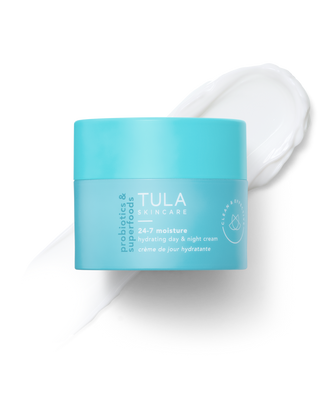


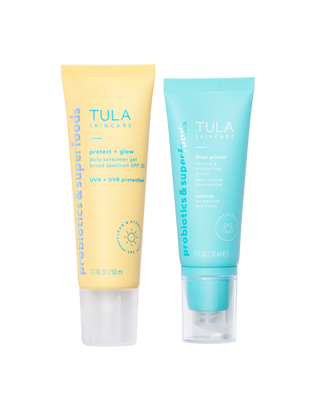

When it comes to what skincare is good for sensitive skin, we like to keep things simple: a gentle, non-stripping cleanser, a fragrance-free moisturizer and a broad-spectrum sunscreen you'll actually want to use every day. Look for formulas with hydrating, barrier-supporting ingredients, and skip anything that leaves your face tingling or tight.
At TULA, we believe skincare for sensitive skin isn't about fewer benefits, it's about fewer potential irritants, and how you introduce a product matters just as much as what's in it.
Below, we'll cover what to look for on a label, which ingredients tend to play nice, which to approach with a bit more care, and how to build a routine your skin can actually relax into.
What Is Sensitive Skin?
So how do you know if you have sensitive skin? If a new cleanser makes your face sting, your skin feels tight right after washing, or your cheeks flush the second you step into cold wind, you probably already know the feeling. Sensitive skin means your skin reacts to things that don't usually bother everyone else, like certain products, weather changes or hot water, often with stinging, burning or itching. Sometimes it shows up as redness or dryness. Sometimes you'll only feel it.
Sensitive skin isn't its own separate skin type, either. It can sit on top of dry, oily or combination skin, which is why two people who both describe their skin as sensitive can need pretty different routines.
Part of the picture is the skin barrier: when the stratum corneum (the outer layer of your skin) isn't as strong as it should be, things from your environment pass through more easily and irritate the layers underneath. What tips your skin over the edge varies from person to person, and we'll get into the usual suspects further down.
Sensitive Skin vs. Sensitized Skin
Skincare professionals often draw a line between skin that is sensitive and skin that has been sensitized. Sensitive skin tends to be a long-running tendency to react. Sensitized skin is more of a temporary state your skin gets pushed into, usually after over-exfoliating, layering too many actives at once, or switching products every few weeks.
The two can feel almost identical, so the more useful question is what changed recently. A new retinoid? A third acid toner this month? A run of at-home peels? Skin that's been sensitized usually settles down once the trigger is removed and the routine goes back to basics for a while. Skin that's naturally sensitive doesn't switch off, but with the right care, it can feel a whole lot more comfortable.
What to Look for in Skincare for Sensitive Skin
Start with the ingredient list. A shorter one is easier to scan, and it makes it much simpler to spot a trigger you already know about. The full ingredient list, usually printed in tiny type on the back or listed on the product page, tells you a lot more than the wording on the front of the box does.
When you're hunting for a gentle cleanser for sensitive skin, two things carry most of the weight: a cleanser that removes makeup and dirt without leaving your face squeaky or tight, and a moisturizer for sensitive skin with hydrating ingredients that keeps the skin barrier comfortable.
Foaming formulas aren't automatically off the table as we’re sometimes led to believe, but harsh surfactants and anything that strips your skin will make sensitivity worse. “Dermatologist tested” and “non-comedogenic” aren’t promises but can help point you in the right direction. They tell you a formula has been considered with reactive or breakout-prone skin in mind. They can't tell you how your skin in particular will respond, which is why every TULA product page lists the full ingredients so you can check for yourself.
One habit that pays off: keep a note on your phone of every product and ingredient that has caused a reaction. Checking a new label against that list can save a lot of guesswork. If you want a shortcut, our fragrance-free skincare is the safest place to start. They swap out the fragrance without swapping out the results.
Fragrance-Free vs. Unscented vs. Hypoallergenic
These three labels sound similar and yet they mean very different things.
Fragrance-free is the one to look for. Unscented isn't the same thing: many unscented products contain masking fragrances that cover the smell of the base formula and can still irritate your skin.
Hypoallergenic sounds the most reassuring of the three, but it carries the least weight. There are no federal standards or definitions governing the term, and manufacturers don't have to submit anything to support it. Treat it as marketing language, then go read the ingredient list for yourself.
The Best Ingredients for Sensitive Skin
The ingredients that tend to suit sensitive skin do one of two jobs. Some support hydration and the skin barrier, so skin holds onto moisture and copes better with the outside world. Others help your skin look and feel calmer and more comfortable.
A review of cosmetic products formulated for sensitive skin found that niacinamide was the most used active, followed by oat (Avena sativa) and allantoin. So it’s no coincidence that you'll find niacinamide and oat across so many TULA formulas. That said, no single ingredient suits everyone. Sensitive skin is personal, and the only real test is how your own skin responds over a few weeks. So treat what follows as a starting point for reading labels rather than a set of promises.
Hydrating and Barrier-Supporting Ingredients
Humectants such as hyaluronic acid and glycerin draw water into the upper layers of skin, which is why they turn up in so many gentle moisturizers, including our own.
Ceramides do a different job. Along with cholesterol and free fatty acids, they're the lipids that sit between skin cells and hold the barrier together, and moisturizers formulated with them can help hydrate skin to strengthen the look of the skin barrier. If your skin feels tight and reactive, a moisturizer with these lipids is usually a better move than a lighter, water-only formula.
Squalane is worth knowing too. It's a lightweight emollient that leaves your skin feeling soft and cushioned without the heaviness of a rich cream, another reason it turns up so often in our formulas with prebiotics.
Soothing Ingredients
Niacinamide, oat and allantoin are the names you'll see most often on products made for sensitive skin, and they show up together in a lot of formulas because they work well side by side. Panthenol is another regular, a hydrating ingredient found in plenty of gentle cleansers and moisturizers.
What these ingredients do is help the skin feel and look more comfortable. They aren't treatments, and they won't resolve a skin condition. If your skin is reacting because something else in your routine is irritating it, no amount of oat in your moisturizer will outrun that. Take the irritant out first, then let the gentle formulas do their job.
Ingredients to Avoid for Sensitive Skin (and Habits That Trigger It Too)
There's no universal banned list here. Tolerance varies, and an ingredient that leaves one person's skin blotchy sits perfectly well on someone else's. Our own formulation policy rules out over 1,600 ingredients that could compromise your skin's health, but even within what's left, everyone's skin has its own opinions. What follows is the group of usual suspects worth approaching carefully.
Fragrances and preservatives are among the most common causes of allergic reactions to cosmetic products, and added scents can trigger irritation or allergic reactions even when there's no allergy involved. It's part of why we offer so many of our bestsellers in a fragrance-free version. After fragrance, the list is fairly predictable: drying alcohols high up an ingredient list, harsh cleansers that leave skin squeaky, very gritty physical scrubs, and strong exfoliating acids or retinoids used too often or started too strong.
Your habits matter just as much as your products. Hot water, scrubbing at your face with a towel or a cloth, washing more often than you need to, and layering three actives in one evening will all leave your skin feeling reactive, whatever's in the bottles.
If your skin has been unhappy for a while, the fastest way forward is usually to strip your routine back to a cleanser, a moisturizer and sunscreen for a couple of weeks, then add things back one at a time.
How to Build a Simple Skincare Routine for Sensitive Skin
Less is more here:
Morning. Cleanse with something gentle and lukewarm water, or just rinse with water if your skin feels fragile. Follow with a fragrance-free moisturizer while your face is still damp, which helps hold onto the water sitting on your skin. Finish with a broad-spectrum sunscreen of SPF 30 or higher, every single day, whatever the weather is doing.
Evening. Cleanse to take off sunscreen, makeup and the day, then moisturize again. That's it. Our Cult Classic Fragrance-Free is a good option here: it's formulated with prebiotics to cleanse to purify your skin's microbiome, washing away makeup, dirt and bacteria on the surface without stripping or over-drying, and like the rest of the range, it's dermatologist tested and cruelty-free.
Treatments and serums can come later, once the basics feel comfortable, and they should arrive one at a time. There's no prize for a ten-step routine, and for reactive skin, there's often a cost.
Two small details make a difference. Keep the water lukewarm rather than hot, and pat your face dry instead of rubbing it. Being consistent with three steps will do more for your skin than an ambitious routine you abandon after yet the next flare-up.
How to Introduce New Products Without Irritation
Before a new product goes anywhere near your whole face, test it. Dermatologists recommend applying it to a small test spot twice daily for 7 to 10 days, somewhere it won't be rubbed or washed off, like the inner arm or the bend of your elbow. A reaction doesn't always show up on day one, which is the whole reason for the wait.
Add one new product at a time, and give it a couple of weeks before the next one joins the routine. If you bring in three at once and your skin objects, you'll have no idea which one to blame. And if your skin does react, stop using the product.
Where Prebiotic Skincare Fits for Sensitive Skin
Your skin's surface has its own ecosystem, known as the skin microbiome, that lives alongside the skin barrier. It's the part of skin health that gets talked about most and understood least.
Prebiotics are where TULA started. They’re ingredients that support your skin's natural ecosystem and help create an environment where your skin can look and feel its best.
Equally relevant if your skin reacts easily is what we leave out. We formulate with sensitive skin in mind, and our own ingredient policy avoids over 1,600 ingredients that could compromise your skin's health.
If you're curious where to start, our skincare formulated with prebiotics collection includes plenty of fragrance-free options.
When to See a Dermatologist About Sensitive Skin
Most sensitive skin can be managed at home with a short, gentle routine and a bit of detective work about triggers.
But some things are worth a professional opinion. If reactions are persistent or painful, if they spread or blister, or if your skin keeps flaring even on the plainest products, book an appointment with a board-certified dermatologist. They can check whether something else is going on, such as eczema, rosacea or contact dermatitis.
Frequently Asked Questions
Can you use retinol if you have sensitive skin?
Often, yes, with a slow start. Use the least intense retinoid formula you can find and apply it every other night to begin with, building up gradually. Retinoids can make skin more sensitive to the sun, so wear sunscreen daily. If irritation appears, pull back. Worth knowing: our own A+ Renewal Advanced Retinal & Peptides Serum uses retinal rather than retinol, a form of vitamin A that's generally considered gentler and better tolerated, which can make it a reasonable starting point if your skin tends to run reactive.
How often should you exfoliate sensitive skin?
Less often than you might think. If your skin is sensitive, start with once a week and go from there. Pause exfoliation altogether whenever your skin stings, flushes or feels tight, and go back to it only once things have settled.
Is mineral sunscreen better for sensitive skin?
Dermatologists do recommend mineral, or physical, sunscreens for sensitive skin. These contain zinc oxide, titanium dioxide or both. To tell which type you have, check the active ingredients on the label. Whichever you choose, daily broad-spectrum protection matters more than the filter type.
Next Steps
You now have the checklist: read the full ingredient list, choose fragrance-free, keep the routine short, and introduce anything new one product at a time. The next part is finding formulas that fit it.
Our skincare for sensitive skin collection is a good place to start. A gentle cleanser and a moisturizer your skin is happy with will get you further than a cabinet full of products. Add to it slowly, patch test as you go, and let your skin set the pace.


