




If your skin feels tight after washing, it's usually because your cleanser has taken more of your skin's own oils than it needed to. Those oils, along with the lipids sitting between your skin cells, are what hold water in the outer layer. Remove some of them and the surface loses water, contracts very slightly, and you feel that pulled, stretched sensation.
A mild version of this is common and settles once you moisturize. Tightness that lingers, or that shows up alongside flaking, redness, or stinging, is worth paying closer attention to.
Here's what causes it, how to tell the ordinary kind from the kind worth acting on, and how to stop it happening.
What That Tight Feeling Actually Is
That tight feeling isn't in your head, and it isn't a sign you've simply imagined the difference between one cleanser and another. It's a physical change happening at the very surface of your skin, and researchers have now measured how it travels from the outside in.
The outermost layer of your skin is called the stratum corneum. Think of it as flattened skin cells held together by a mortar of lipids, mainly ceramides, cholesterol, and free fatty acids, with a set of water-binding compounds known as natural moisturizing factor (NMF) tucked inside the cells themselves. Together, these keep water where it belongs and slow the rate at which it escapes (something called transepidermal water loss, or TEWL).
When a harsh cleanser strips away some of those lipids, the stratum corneum holds less water and physically contracts. This shrinking is what you end up experiencing as tightness.
The same mechanism runs in reverse, which is why a moisturizer works so quickly. Raise the water content of the stratum corneum and it swells slightly, the tension eases, and the tight feeling goes with it.
Why "Squeaky Clean" Became a Selling Point
For decades, soap and face wash advertising taught people that a tight, squeaky finish was proof a cleanser had done its job. Plenty of us still reach for it without thinking twice.
The trouble is that squeakiness describes what has been removed rather than how clean you are. That particular finish comes from surface lipids being gone, so the sensation you've been trained to interpret as success is really an inventory of what the cleanser took with it.
This shows up most often in people with oily or breakout-prone skin, who understandably reach for something stronger to control shine. Wanting truly clean skin is completely reasonable. The goal isn't to cleanse less thoroughly, it's to cleanse without stripping.
Why Cleansing Leaves Skin Feeling Tight
Cleansers work through surfactants, which are molecules with a water-loving end and an oil-loving end that surround oil and debris so water can carry them away. The problem is that the more aggressive surfactants don't distinguish between the oil you want gone and the lipids your skin made on purpose.
Traditional soap adds a second problem: it has a high pH. That high pH makes the stratum corneum swell up, and the soap binds to the proteins inside it. Once you rinse and the water dries off, those proteins can't hold onto water as well as they could before. That's the drop in hydration you feel as tightness.
When Tightness Is Normal and When It Is Not
Washing raises your skin's surface pH, and it does so even when you rinse with water alone. Skin then works its way back to its normal acidic state, a process that can take up to several hours. Some short-term change after cleansing is simply what washing does.
So the useful questions are about duration and company. How long does the tightness last? Does it ease once you apply moisturizer? What else arrives with it? Mild tightness that settles within a few minutes of moisturizing sits in a very different category from tightness that's still there an hour later, or that comes with flaking, redness, or a stinging response.
The reason persistent tightness matters is that the effect builds. Transepidermal water loss gets worse, skin hydration keeps dropping, and natural moisturizing factor levels fall. That’s the direction of travel when stripping happens over and over.
When to Check In With a Dermatologist
If tightness is persistent and comes with redness, flaking, burning, stinging, or skin suddenly reacting to products it used to tolerate, it's worth raising with a board-certified dermatologist.
Those signs can also belong to conditions such as eczema or contact dermatitis, which respond to targeted treatment rather than a change of cleanser. A professional can tell the difference in a way that reading about it cannot.
And if you're using prescription retinoids or acne treatments, talk to whoever prescribed them before you start changing your routine on your own. Tightness may be an expected part of that treatment, or a sign the schedule needs adjusting.
The Everyday Habits That Make Tightness Worse
Your cleanser is only part of the story. How you wash often matters as much as what you wash with.
Cleanse twice a day and after heavy sweating, using a gentle, non-abrasive cleanser without drying alcohols, applying it with your fingertips rather than a washcloth or mesh sponge, and patting dry with a soft towel instead of rubbing. They're also clear about scrubbing: resist it, because scrubbing irritates the skin.
Exfoliation stacks on top of all this. A scrub, an acid toner, and an active serum arranged around the same wash will create far more potential for irritation than any one of them would alone, and tightness is often the first thing to tell you the total has crept too high.
If you have oily skin, the instinct when your face feels tight is frequently to wash more. It's worth resisting. Over-cleansing and scrubbing tend to irritate skin rather than control oil, and irritated skin rarely looks calmer.
Conditions play a part too. Indoor heating, low humidity, cold wind, and air conditioning all reduce the moisture available to your skin, which is why the cleanser that felt fine in July can feel stripping in January. If dryness is a recurring theme rather than a seasonal one, a routine built around dryness and barrier support is a good starting point.
Water Temperature and Hard Water
Hot water dissolves surface lipids more readily than lukewarm water does, which is why washing your face in a hot shower tends to leave it tighter than washing at the sink. Lukewarm is the standard recommendation for that reason.
Hard water is also a contributing factor. It leaves mineral deposits on the skin and can make the same cleanser feel more drying than it did elsewhere, which is worth knowing if the problem appeared after you moved.
What to Look for in a Cleanser That Does Not Strip
Once you know the mechanism, choosing better gets easier, and you can apply this to a bottle already sitting on your shelf.
Three things matter. Milder surfactant systems that clean without removing essential lipids. Formulations that include humectants and lipids rather than surfactants alone. And a pH close to your skin's own range, which helps protect the acid mantle. And replacing the lipids lost during cleansing is part of what a good routine does, which is why what you apply next counts as much as what you wash with.
TULA is doctor-founded and science-backed, and our cleansers are formulated with prebiotics to hydrate and nourish your skin's microbiome, so they clean without leaving that tight, dry feeling behind. The Cult Classic is a gel-to-foam formula that cleanses to purify your skin's microbiome, washing away dirt, oil, makeup, and bacteria without stripping or over-drying the skin. In TULA's own testing, after 1 use, 100% agreed skin does not feel stripped.*
If that's the standard you want to hold your own products to, a gentle prebiotic cleanser is the place to start.
*Self assessment on 31 subjects after 1 use.
How to Stop Your Skin Feeling Tight After Washing
Two changes will do most of the work here, and you can make the first one tonight.
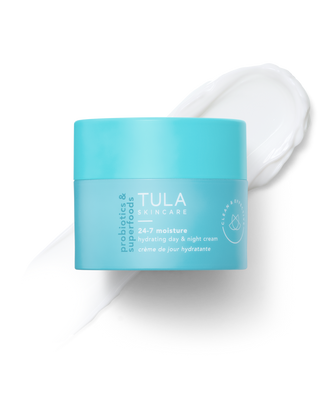
Apply your moisturizer while your skin is still slightly damp, ideally within about a minute of rinsing, because the water still sitting on the surface is what a humectant layer has to draw on. Wait until your face is fully dry and you've lost the thing you were trying to hold onto. Our 24-7 Moisture Hydrating Day & Night Cream is made for this step, melting into damp skin to help lock in hydration.
The second change is to swap the cleanser rather than piling more products on top of it. Layering a hydrating serum over a cleanse that strips is treating the symptom. Starting the routine gently means everything after it has less to compensate for.
If you do switch, give it two to three weeks before you judge it, and bring exfoliants and actives back gradually rather than all at once. Reintroducing everything on day one is the quickest route back to where you started. Skin also varies from person to person, so what settles one face in a fortnight may take longer on another.
For skin that runs dry, a richer texture helps. Rich Rinse is a prebiotic cleanser with ceramides that gently removes makeup and impurities while deeply hydrating dry skin. It's suitable for all skin types, but it's especially good for dry skin.
Frequently Asked Questions
How long should my skin feel tight after washing?
A mild tight feeling in the first minute or two after rinsing is common and should ease once you apply moisturizer. If tightness is still there an hour later, or shows up after every single wash regardless of the weather, that points to your cleanser rather than the conditions around you.
Does tight skin after washing mean my cleanser is working?
No. It means the cleanser has removed some of your skin's own surface lipids alongside the dirt, oil, and makeup. Cleansing effectively and leaving skin comfortable are not competing goals. A well-formulated cleanser can take off a full face of makeup without leaving anything pulled behind it.
Can oily skin feel tight after washing?
Yes, and it happens often. Tightness reflects water loss from the skin's surface rather than how much oil your skin produces, so oily skin can be dehydrated at the same time. Responding by washing more frequently usually makes the sensation worse rather than better.
Should I use a toner if my skin feels tight after cleansing?
A hydrating toner applied to damp skin can help, but it won't offset a cleanser that strips in the first place. Astringent or alcohol-based toners are likely to increase tightness. What matters most is getting a moisturizing layer onto damp skin quickly, whichever product that is.
Next Steps
If your skin has been feeling tight after every wash, the fix is more likely to be a swap than an addition. Cleansing thoroughly and cleansing comfortably are not opposites, and the first step in your routine sets up everything that follows it.
At TULA, our cleansers are formulated with prebiotics to hydrate and nourish your skin's microbiome and support your skin's barrier, and made to leave your skin without that tight, dry feeling afterward. You can browse the full range of cleansers and exfoliants to find the texture that suits your skin.
Not sure where to begin? The TULA Skin Quiz takes a couple of minutes and will point you toward the right starting place.


