




So, why is your skin dry in winter when nothing about your routine has changed? Here's the short answer: it isn't your routine. It's the air, and it's working against you twice over. Outdoor air holds very little moisture when it's cold, and heating that same air indoors makes it drier still, so your skin loses water faster than it can hold on to it.
The tightness after cleansing. The flaking around your nose. The makeup that suddenly clings and separates by lunchtime. None of that means you're doing something wrong. It means your skin is working harder to hold on to water than it was back in August.
Let's get into exactly how cold weather affects skin, and more importantly, what actually helps.
What Cold Air Actually Does to Skin
Cold air isn't just the backdrop to winter skin problems. It's actively pulling water out of your skin. Air holds less water vapor the colder it gets, so when the temperature drops, so does the moisture in the air around you. That drier air draws water from the outermost layer of your skin, the stratum corneum, through a process called transepidermal water loss.
Your skin also has less to work with in the cold. Oil production slows when temperatures fall, and those natural oils are what help maintain your skin's surface barrier and lock moisture in. Less oil means a thinner protective film across the surface, right when the air is pulling hardest.
Wind adds a third pressure. It physically disrupts the skin's surface on exposed areas, which is why cheeks, lips, and the backs of hands take the worst of it.
None of this creates winter skin barrier damage in any permanent sense. Your barrier hasn't broken. It's working harder and holding less water than it does in summer, and low humidity and low temperatures together reduce barrier function and leave your skin more reactive to irritants.
Why Low Humidity and Skin Don't Get Along in Winter
Water is always moving outward through your skin, from the deeper, wetter layers toward the surface, where it evaporates. That's transepidermal water loss, and it happens constantly whatever the weather.
What changes in winter is the gradient. The drier the air around you, the steeper the difference between the water in your skin and the water in the air, and the faster water leaves. This is a normal physical response to a change in the environment. It isn't a sign that something is wrong with your skin.
What Indoor Heating Does to Skin
The environment you spend most of winter in isn't outdoors at all. Indoor heating dry skin is just as real as the outdoor kind, and it's sometimes worse, because it's the air you're sitting in for eight, ten, twelve hours a day.
Heating works by raising the temperature of air that's already cold and dry. It doesn't add any water back. So the air in your home and your office ends up drier than the air outside it. Forced-air systems are particularly drying, because they don't just heat the air, they keep it moving. And circulating air carries moisture away from your skin faster than still air does.
This explains something that otherwise seems strange: skin that feels tight and itchy on a day you never left the house. It also explains why so many people notice it’s worse first thing in the morning. A heated bedroom is probably the longest continuous stretch you spend in dry indoor air all day.
Why Moving Between Cold Air and Heated Rooms Adds Extra Stress
Step outside and the small blood vessels near your skin's surface constrict, reducing blood flow to conserve heat for your core. Step back into a heated room and they dilate again, quickly. That rush of blood toward the surface is what produces the flush you see in the mirror after coming in from the cold. It's ordinary thermoregulation, and most people go through the cycle several times a day between commutes, errands, and the school run.
The result is skin that can look and feel more reactive in winter, flushing more easily and settling more slowly, without a single product having changed.
Hot showers make this harder. A long, hot shower is exactly what you want after being out in the cold, but heat melts the oils off your skin, and the warmer the water, the drier your skin will be afterward. You end up stripping the surface at the moment it has the least to spare.
Signs Your Skin Balance Has Shifted With the Weather
Most people notice the symptoms well before they connect them to the season.
The familiar ones: tightness in the minutes after cleansing, flaking around the nose and brows, foundation clinging to dry patches instead of sitting flat, a general dullness, and products that stung yesterday having been perfectly comfortable last month.
There's often a change in how skin feels through the day, too. Skin that was comfortable in the morning starts to feel tight by mid-afternoon in a heated office, and the moisturizer that used to last until evening stops going the distance.
Oily and combination skin isn't exempt from any of this. Skin can be dehydrated and oily at the same time, because the water content of the surface and the oil produced beneath it are two different things. Some people see more congestion in winter rather than less, particularly once they start reaching for heavier creams to solve the dryness.
The timing is the useful clue. If these signs arrived alongside the first cold snap and the heating going on, the environment is the most likely explanation, not anything you did to your routine.
Why a Cold Weather Skin Care Routine That Worked in Summer Struggles in Winter
A skincare routine is calibrated to an environment. Yours has changed.
Lightweight, humectant-led formulas do well in humid air because humectants draw water in, and in the summer there's atmospheric moisture for them to draw on. In very dry air there's much less available, so the same hyaluronic acid serum that felt perfect in August can feel like it isn't doing much in January. It isn't that the product stopped working. It's that it's working on its own, with nothing sealing the result in.
That's why layering matters more now. A humectant needs an emollient or an occlusive over the top of it, which usually means a richer facial moisturizer for the colder months rather than a different serum. Reaching for a cream formulated with prebiotics that's built for dryness is an easy swap that doesn't mean overhauling your whole routine.
Active ingredients need a second look too. Cut back on alpha hydroxy acid and beta hydroxy acid products in the winter, because they can irritate skin in colder months even when combined with moisturizing creams. And retinol and other anti-aging ingredients can be too drying for daily use once the cold sets in. This doesn't mean stopping. It means pulling the frequency back and watching how your skin responds.
How to Adjust Your Cold Weather Skin Care Routine
Start with cleansing. If your cleanser leaves your face feeling squeaky, it's doing too much for this time of year. A cream or milk format is perfect here, and lukewarm water is better than hot. Twice a day is plenty. The Rich Rinse is our cream-to-foam pick for this season: it cleanses without leaving skin feeling dry or stripped, which is what a winter cleanser should do.
Then fix the timing. This is the step most people get wrong. Pat your face dry rather than rubbing, and get moisturizer on within three minutes, before the dry air evaporates the water sitting on your skin. You're using the moisturizer to trap moisture that's already there.
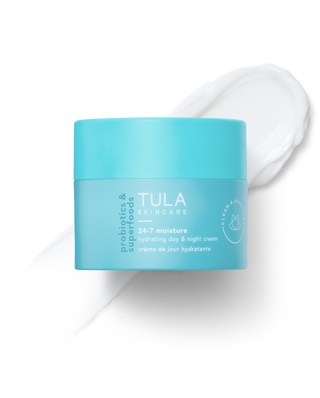
Layer, don't swap. Keep your hydrating serum and add something over it. The serum gives the moisturizer something to seal, and stacking the two does more than replacing one with the other. Our 24-7 Ultra Hydration Serum under 24-7 Moisture is our layering go-to here: the two work together to nourish your skin's microbiome and strengthen the skin barrier. Reapplying moisturizer partway through the day is reasonable if you sit in a heated office, and it's worth keeping a travel size somewhere you'll actually reach for it.
Protect before you go out. Applying a thicker moisturizer to exposed skin before you step into cold air gives the surface something to work against, which matters most on cheeks, lips, and hands. 24-7 Moisture Intense is formulated for this, since it hydrates to repair dry skin and strengthens the barrier before you're back out in it.
At TULA, our approach to this season is about supporting skin balance through it, not scrambling to treat dryness once it shows up, which is where our formulas formulated with prebiotics come in. If you want to see what suits your skin this season, our formulas made for dry, stressed winter skin are the place to start.
Ingredients That Help Skin Hold On to Moisture
Three groups do the work, and a winter routine usually needs all three.
Humectants draw water into the upper layers. Glycerin and hyaluronic acid are the common ones, along with urea. Emollients smooth and soften the surface, filling the gaps between cells. Squalane is a good example. Occlusives sit on top and slow water from escaping.
Dermatologists routinely point to urea, ceramides, and hyaluronic acid as ingredients worth looking for on a label. At TULA, we formulate with prebiotics alongside these ingredient groups, because supporting your skin's natural balance matters as much as any single hero ingredient.
The common mistake is reaching only for a heavier cream. Without a humectant underneath, you're sealing in less than you could be.
Changing Your Environment, Not Just Your Products
No routine fully compensates for the air in the room. At a certain point, the room is the problem.
A humidifier is the single highest-impact change you can make, and the bedroom is the place to put it, given how many hours you spend there. Aim to keep indoor humidity somewhere between 30 and 50 percent.
Smaller adjustments add up, too. Keep showers short and closer to lukewarm. Moisturize your hands after every wash, not just at the end of the day. Cover exposed skin with a scarf when it's windy, and consider gloves for washing up and cleaning as well as for the cold.
It's also worth knowing where the threshold sits. Dry skin symptoms tend to appear once outdoor humidity falls below 10 percent, which in most of the country means the problem starts well before deep winter.
When Winter Dryness Needs a Dermatologist
Most winter dryness responds to a richer routine and more humidity. Some of it doesn't, and it's worth knowing where the line sits.
See a board-certified dermatologist if dryness persists despite all of the above, or if you have cracking, bleeding, painful splits, or a spreading rash. Cold, dry weather is well documented as increasing the risk of flares in people with atopic dermatitis, and that's managed medically rather than with a routine change (although skincare still brings some much-needed support).
Frequently Asked Questions
Does drinking more water help with dry winter skin?
Staying hydrated is worth doing, but for someone already drinking enough, adding more water won't do much for dry skin, because winter dryness is mostly a matter of water escaping through the skin rather than a shortage of water in the body. Topical moisturizers and indoor humidity are the more effective strategies.
Does cold weather dry out your skin even if it's naturally oily?
Yes. Cold, dry air pulls moisture out of every skin type, oily included. Oil and water are two separate things: your skin can be producing plenty of oil at the surface while still losing water underneath. That's why some people with oily or combination skin still notice tightness and flaking come winter, alongside the shine they're used to.
Can dry indoor air cause breakouts as well as dryness?
Yes. Some people see more congestion in winter, not less. Skin can be dehydrated at the surface while still producing oil underneath, so it feels tight and looks flaky at the same time. Heavier occlusive products introduced to solve the dryness can also contribute to congestion for some skin types, which is why the formula matters as much as how rich it feels.
How long does it take skin to adjust when the weather changes?
Most people notice things settling within two to four weeks of adjusting both their routine and their indoor humidity. The stratum corneum renews continuously, so improvement builds gradually rather than appearing overnight. Consistency tends to do more here than adding extra products on top.
Can winter affect my skin if I'm indoors most of the day?
Yes, and for many people the indoor environment is the bigger factor. Heated air is often drier than the outdoor air it came from, so someone who rarely goes outside can still lose a significant amount of water from the skin surface all season long.
Balanced, Hydrated, Glowing: Winter Skin the TULA Way
Cold weather skin care doesn't have to mean overhauling everything you own. It means supporting your skin through a harder season: gentle cleansing that doesn't strip, layering that actually seals moisture in, and a bedroom humidifier doing some of the work your products can't do alone.
At TULA, that support comes formulated with prebiotics, so your routine can help nourish your skin's microbiome and strengthen the skin barrier while it works toward a healthy-looking glow, not just through winter, but every season after it, too.
Have a look at the winter skin collection and see what fits how your skin is behaving right now.


