




Let's clear something up: there's really only one structure here, not two. Your skin barrier is the stratum corneum, the outermost layer of your skin, and “moisture barrier” is simply a name for one of the jobs it does: holding water in. So when people debate moisture barrier vs skin barrier, they're usually comparing a whole to one of its parts.
Here's what each term refers to, why they get blurred together, and how to read what your own skin is telling you.
What Is the Skin Barrier?
It helps to start here, since the second term only makes sense once this one is clear. Your skin barrier is the stratum corneum: the outermost layer of your epidermis, and your body's first line of defense against everything outside of it. It's doing several jobs at once, and holding water in is only one of them.
Alongside limiting water loss, the stratum corneum blocks irritants and pollutants from getting in, plays a role in what can be absorbed through the skin, and manages the shedding of old cells. It also carries a slightly acidic surface film, the acid mantle, which helps keep your skin's pH in balance and plays a part in your skin's natural defenses.
Your skin's microbiome lives on this same surface, which is why conversations about prebiotics belong to the skin barrier story as much as the moisture story. It's also why our prebiotic-formulated products are designed with your skin's whole ecosystem in mind, not just water retention.
A moisturizer isn't rebuilding this layer from scratch. It's helping support the barrier function you already have, so it can do its job comfortably.
The Brick Wall Model
The usual way to picture the skin barrier is a brick wall. Corneocytes, the flattened cells at the skin's surface, are the bricks. The lipids sitting between them are the mortar.
That mortar is a carefully balanced mix of lipids, including ceramides, cholesterol, and fatty acids, and how well they work together plays a big part in how comfortable and resilient your skin feels.
One difference worth knowing: a wall is static, but your skin barrier isn't. Cells are made deeper in the epidermis, migrate upward, flatten out, do their shift at the surface, and are shed. New ones are constantly arriving to replace them. What you're supporting is an ongoing process, not a finished piece of masonry, which is also why nothing you apply works overnight.
What Is the Moisture Barrier?
The moisture barrier isn't a place. You couldn't point to it on a cross-section diagram of skin the way you can point to the epidermis or the dermis. It's a function, specifically, your skin's ability to hold onto water.
So what is the moisture barrier actually made of? The same things the skin barrier is made of. The lipid matrix doing the structural work is the same lipid matrix limiting transepidermal water loss, or TEWL, the water that continuously evaporates from your skin's surface into the air around you. When those lipids are disrupted, TEWL goes up.
There's a second piece too. Inside your skin cells sits a group of natural, water-binding compounds known as your skin's natural moisturizing factor, or NMF. These help hold water within the cells themselves and support your skin's naturally balanced surface pH.
So the moisture barrier is really two mechanisms working together. The lipids between the cells slow water from leaving. The compounds inside the cells hold onto the water that's already there. Neither is a layer you could isolate, which is exactly why the term describes a capability rather than a location.
None of this makes “moisture barrier” skin language wrong. It's a plain-English name for something real, and something that’s useful for how your skin feels. It's just not a separate structure.
Moisture Barrier vs Skin Barrier: What Actually Differs
The skin barrier is the full job description. The moisture barrier is one line on it.
Skin barrier |
Moisture barrier |
|
What it refers to |
The whole protective function of your outer skin |
One specific job: water retention |
Where it sits |
The stratum corneum |
The same stratum corneum |
What it does |
Limits water loss, blocks irritants, regulates absorption, hosts the microbiome, maintains the acid mantle |
Limits transepidermal water loss |
What disrupts it |
Harsh cleansers, over-exfoliation, environmental stress, underlying skin conditions |
The same things, showing up as increased water loss |
What supports it |
Gentle cleansing, moisturizer, sun protection |
Humectants and occlusives in a moisturizer |
Because they share one structure, the two rarely act up independently. When barrier lipids are disrupted, water loss increases at the same time, which is why skin barrier vs moisture barrier is a distinction that matters more in conversation than in practice.
This is also good news if you've been wondering whether you need a separate product for each. Advice aimed at one is almost always advice aimed at both.
Why the Two Terms Get Used Interchangeably
If you've found two articles saying different things, you weren't misreading them. Dermatologists quoted in consumer press regularly use “moisture barrier” and “skin barrier” to mean the same thing, and so do a lot of skincare brands. That’s just because the overlap is real.
“Moisture barrier” caught on for a simple reason: water loss is the barrier function you can really feel. Tightness after washing, flaking, dryness that won't settle. These are noticeable in a way that a shift in surface pH isn't, even though both happen in the same place.
Some sources go the opposite way and split barrier functions into clear, separate categories: a permeability function, a defensive function, a photoprotective function.
How to Tell Which One Your Skin Needs Help With
Since the two overlap, the useful question is which pattern you're seeing.
Signs that point mainly toward water loss tend to be about comfort and appearance. Skin feels tight after cleansing. It looks dull rather than luminous. Fine lines seem more obvious than they did last week, particularly around the eyes, and skin looks better within minutes of applying a moisturizer that helps hold hydration in place.
Signs that point toward wider barrier disruption are different in character. Products that never used to sting suddenly do. Redness lingers instead of settling. Texture turns rough or flaky, and a normal moisturizer doesn't fix it.
One symptom on its own usually means very little. Skin fluctuates with weather, sleep, stress, and hormones, and a single tight morning after a long-haul flight isn't a signal about anything. What's worth paying attention to is a cluster of these appearing together and sticking around for a little too long.
It's also worth thinking back over the previous couple of weeks. Barrier disruption rarely arrives out of nowhere. More often it builds slowly through a run of hot showers, a new acid, a stretch of cold weather with indoor heating, or two active products layered where one would have done, and then one small addition tips it over. The product you blame is frequently just the last thing you added rather than the cause.
If you have persistent burning, cracking, swelling, or a rash, that's a conversation for a board-certified dermatologist.
Dehydrated Skin Is Not the Same as a Compromised Barrier
Worth separating these, because dehydrated skin vs dry skin vs a compromised barrier are three different things.
Dehydrated skin is simply short on water. It can happen to anyone, including people with oily skin, and it often improves quickly once hydration is restored.
A compromised barrier is broader. It's a disruption in how the outer layer is functioning, and its signature is that skin keeps reacting to products that were previously fine, even after you've hydrated it.
Dry skin is a third thing again: a skin type, describing skin that produces less oil. You can have dry skin with a perfectly healthy-looking barrier, and you can have oily skin with a struggling one. The two aren't opposites, and they're not on the same scale.
What Supports Both at the Same Time
Good news first. You don't need two routines, because there's only one structure to support.
Three ingredient categories do most of the work. Humectants such as glycerin and hyaluronic acid draw water into the skin. Emollients smooth the surface and improve how skin feels. Occlusives sit on top and slow evaporation. A well-formulated moisturizer will combine all three, and the list of ingredients to look for includes glycerin, hyaluronic acid, and dimethicone.
Timing matters, too: apply moisturizer while your skin is still damp after cleansing rather than waiting until it has fully dried. And choose fragrance-free formulas when your skin is feeling reactive. 24-7 Moisture Fragrance-Free is a good option if that sounds like your skin right now.
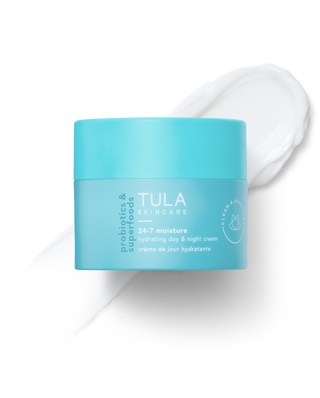
Otherwise, our 24-7 Moisture Hydrating Day & Night Cream is clinically proven to deliver long-lasting hydration and leave skin looking plump and glowing. It's formulated with prebiotics to help nourish your skin's microbiome and support your skin's surface barrier for a healthy-looking glow. Want an extra boost? Layering on our 24-7 Ultra Hydration serum before you moisturize adds another round of hydration. Whichever routine you land on, consistency will do more for you than any single ingredient on the label.
When you cleanse, keep the water warm rather than hot and use enough cleanser to lift dirt and oil. Our Cult Classic Purifying Face Cleanser gives your skin a thorough yet gentle cleanse to keep your skin happy instead of stripped in the process.
Frequently Asked Questions
Is the moisture barrier the same as the acid mantle?
No, though they occupy the same surface. The acid mantle is the slightly acidic film on your skin that helps keep your pH balanced and plays a part in your skin's natural defenses. The moisture barrier describes water retention. They're two different functions of the same stratum corneum.
Do I need a separate product for my moisture barrier?
No, because there's no separate structure to treat. A well-formulated moisturizer that combines humectants to draw water in with occlusives to slow evaporation supports water retention and wider barrier function at the same time. One good moisturizer, like 24-7 Moisture, covers both jobs.
Does drinking more water help your moisture barrier?
Staying hydrated matters for your overall health, but it won't on its own restore your skin's ability to hold water. That ability depends on the lipid matrix and the natural moisturizing factor already in your stratum corneum, which is why what you apply topically is the more direct lever.
Next Steps
Once you know the two terms describe the same structure, choosing products gets a lot simpler. You're not solving two problems. You're supporting one layer that happens to have several jobs, and the products that help it hold water are the same ones that help it feel comfortable and resilient.
If tightness, dullness, or that persistent dry feeling sounds familiar, our Dryness & Barrier Boost collection groups the formulas designed around exactly that. Not sure where to start? Take our Skin Quiz and we'll help you find your match.


