




At TULA, balance is kind of our whole thing. It's literally what our name means in Sanskrit, and it's why we think about skin as a living ecosystem rather than a single layer you can fix with one product.
Two of the biggest players in that ecosystem get confused constantly: the skin barrier and the skin microbiome. So here's the difference between skin barrier and microbiome in the simplest terms we know. The skin barrier is the physical outer layer of your skin, built from cells and the lipids that hold them together. The skin microbiome is your skin's natural ecosystem that sits on top of it. The barrier is the wall. The microbiome is what lives on the wall. They're not independent, though. Damage to one almost always shows up in the other.
Here's what each one does, how to tell which is struggling, and how to support both without running two separate routines.
What Is the Skin Barrier?
Picture a brick wall. The corneocytes, the tough dead cells at the surface, are the bricks. The lipids between them, ceramides, cholesterol and fatty acids, are the mortar. That structure sits in the stratum corneum, the outermost layer of your skin, and it does two jobs: it keeps water in, and it keeps irritants, allergens and other unwanted elements out.
The keeping-water-in part has a name. Transepidermal water loss, or TEWL, is the moisture that evaporates through the skin's surface, and a healthy barrier keeps it low. There's also the acid mantle, a thin film of sebum and sweat that holds the skin's surface at a slightly acidic pH of around 5.5. Working alongside both is natural moisturizing factor, or NMF, a mix of small molecules inside the corneocytes that draws water in and holds onto it.
When the barrier is compromised, all of that slips. Water loss rises, so your skin feels dry no matter how much you put on it. The wall becomes more permeable, so things that used to sit harmlessly on the surface can now get in. Products you've used happily for years suddenly start to sting. These are some of the classic signs of a damaged skin barrier.
None of this means your barrier is broken beyond repair, and no moisturizer rebuilds it for you overnight. What a well-made formula does, ours included, is support the conditions your skin needs to hold itself together.
What Is the Skin Microbiome?
If the barrier is a structure, the microbiome is a population. It's your skin's natural ecosystem, living on your skin's surface and down inside your follicles.
That ecosystem competes with less-welcome elements for space and resources, helps hold surface pH where it should be, produces antimicrobial peptides, and stays in constant conversation with your skin's immune system. It even contributes to the barrier itself.
The useful question isn't what your ecosystem is made up of, but whether the population is balanced and diverse. Skin dysbiosis is the word for when it's not, and it's associated with acne, eczema and rosacea rather than being a condition in its own right.
This is exactly the territory that our prebiotic skincare is made for. Prebiotics are ingredients formulated to support the microbial population you already have, rather than introduce a new one.
Skin Barrier vs Microbiome: The Key Differences
Skin barrier |
Skin microbiome |
|
What it is |
Cells and lipids |
Your skin's natural ecosystem |
Where it sits |
The stratum corneum |
On and within that surface |
Main job |
Keeps water in, keeps irritants out |
Crowds out unwanted elements, trains immunity |
When it goes wrong |
Dryness, tightness, flaking, stinging |
Breakouts, redness, recurring flare-ups |
Look at skin microbiome vs skin barrier side by side, and the line worth remembering is this: the barrier is the wall, the microbiome is what lives on the wall. One is architecture. The other is an ecosystem.
The other difference is one of scale. The barrier is something you can measure directly, through water loss and surface pH. The microbiome is a shifting population that resists that kind of snapshot, which is part of why it's easier to talk about barrier support than microbiome balance.
In practice, though, the clearest difference is the symptom picture. Barrier trouble announces itself through texture and comfort: skin that feels tight, looks flaky and stings on application. Microbiome imbalance tends to show up as activity instead: breakouts that keep returning to the same places, and redness that settles and comes back.
That said, the two symptom pictures overlap more than any comparison table can show, and plenty of people have both at once.
How the Barrier and the Microbiome Work Together
Current dermatology research treats the barrier and the microbiome as a coupled system rather than two separate targets, with your skin's natural ecosystem actively supporting the epidermal barrier instead of simply sitting on it.
The relationship runs in both directions, and each is worth taking separately. The microbiome contributes to building the barrier. The barrier, in turn, shapes what can thrive there at all. When one direction goes wrong, the other usually follows, which is how a single harsh week of skincare becomes a month of trouble.
It also explains something people find frustrating. Skin that was fine for years can turn reactive quite suddenly, and the trigger often looks too small to account for the result. That's what a feedback loop looks like from the inside. The disruption doesn't need to be dramatic. It only needs to tip the system far enough that each side starts making the other worse.
Diet and gut health come up constantly on this subject. And there's real research interest in the gut-skin connection, but the mechanisms aren't settled, and it's probably not the reason your face is reacting this week.
How the Microbiome Helps Build the Barrier
Your skin's natural ecosystem isn't a passive tenant. It's been shown to help build and restore the physical barrier itself, contributing to the very lipids and proteins it's made of.
This ecosystem also produces antimicrobial peptides and prompts immune responses that back up the barrier's own defensive work, and helps keep surface pH acidic by breaking down sebum into free fatty acids.
This is why a stripping cleanse can leave your barrier worse off even when the product itself wasn't especially harsh on lipids. You didn't only remove oil. You removed part of the workforce.
How to Tell Which One Needs Attention
The barrier-led picture is mostly about comfort and texture. Skin feels tight after cleansing and stays tight. Texture turns rough or flaky. Fine dehydration lines appear that weren't there last month. Products you've used happily for years suddenly sting on application. And skin that feels thirsty no matter how much moisturizer goes on, because moisture is leaving faster than you can replace it. These are some of the most common signs of a damaged skin barrier.
The microbiome-led picture is more about activity than texture. Breakouts that keep returning to the same few places. Redness that settles for a week and comes back. Patchy congestion. Flare-ups that arrive without an obvious trigger and leave the same way.
And really, most people arrive with a mix of both. Because the two systems are coupled, a clean single-cause picture is the exception rather than the rule, and working out which one is really at fault is usually less useful than addressing the conditions they both depend on.
If symptoms are persistent, worsening or painful, see a board-certified dermatologist.
What Disrupts Them Both
The list of things that disrupt your skin overlaps almost entirely between the two systems. That overlap is the strongest argument for treating them together.
Over-cleansing, washing with soap, over-exfoliating and stacking multiple actives all do the same two things at once. They strip surface lipids and they raise surface pH. Soap can't tell the difference between what you want gone and what you want to keep, so it removes natural oils and the ecosystem your skin depends on in the same pass.
Environment adds to it. Low humidity, hot water, UV exposure, air pollution and friction from towels or fabric all count.
So do the changes you can't control. Age, hormonal shifts, pregnancy and the postpartum period alter both barrier lipids and microbial composition, which is why skin can start behaving like someone else's at those stages.
How to Support Your Skin Barrier and Microbiome Together
One principle does most of the work here. Protect the conditions both systems depend on, rather than running two routines side by side.
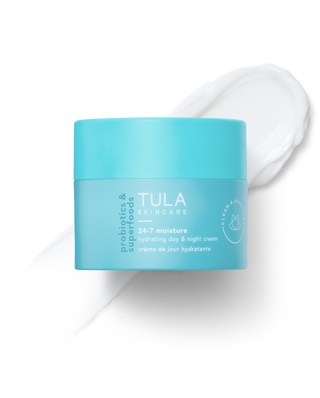
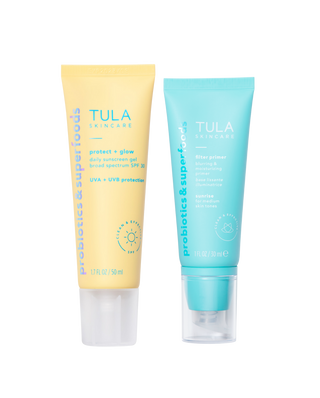
In practice, that means cleansing gently and no more than twice a day, with something mild and soap-free, like The Cult Classic, formulated with prebiotics to cleanse without stripping. It means keeping actives to a frequency your skin can actually handle rather than the maximum the label allows. It means moisturizing consistently with barrier lipids like ceramides, cholesterol and fatty acids, alongside humectants like glycerin and hyaluronic acid, the way 24-7 Moisture is formulated to do. And it means wearing broad-spectrum sunscreen daily, like Protect + Glow SPF 30, which protects barrier integrity as well as everything else it's known for.
If you're wondering how to support your skin microbiome specifically, prebiotics for skin microbiome support are the piece to focus on. Prebiotics are ingredients formulated to support the microbial population already living on your skin, essentially feeding what helps keep your skin's ecosystem in balance. That’s why at TULA, we formulate with prebiotics across our range of cleansers, moisturizers and treatments.
Frequently Asked Questions
Is the skin microbiome part of the skin barrier?
It depends on the definition. Some sources describe the microbiome as one component of a broader barrier system, alongside the lipid layer and acid mantle. Dermatology research more often treats them as two distinct systems that interact constantly. Either way, the practical conclusion is the same.
Can you fix your skin barrier without affecting your microbiome?
Not really, because both respond to the same conditions. Restoring surface lipids and acidic pH changes the environment your microbial population lives in, so the two tend to improve together. This is why gentler habits, rather than more products, usually shift both at once.
How long does it take to see a difference?
Comfort often improves within a few weeks of simplifying a routine, though it typically takes three or four months to see the real benefits of barrier-focused care. Timelines depend on what caused the disruption and how consistently it's been removed.
Next Steps
The habits that protect your barrier are the same ones that keep your microbiome stable, and neither responds well to being attacked with more steps or harsher actives.
At TULA, we’re founded by Dr. Roshini Raj, a board-certified gastroenterologist who saw firsthand how the microbiome shapes skin, and built the brand around a simple idea: skin wellness starts with balance. Every formula is doctor-founded, science-backed and clinically-proven, which is a long way of saying we don't guess.
If you want a straightforward place to start, our full size skincare routines feature simple prebiotic-formulated routines based on your own skin’s needs. Start gentle, stay consistent, and give it longer.


